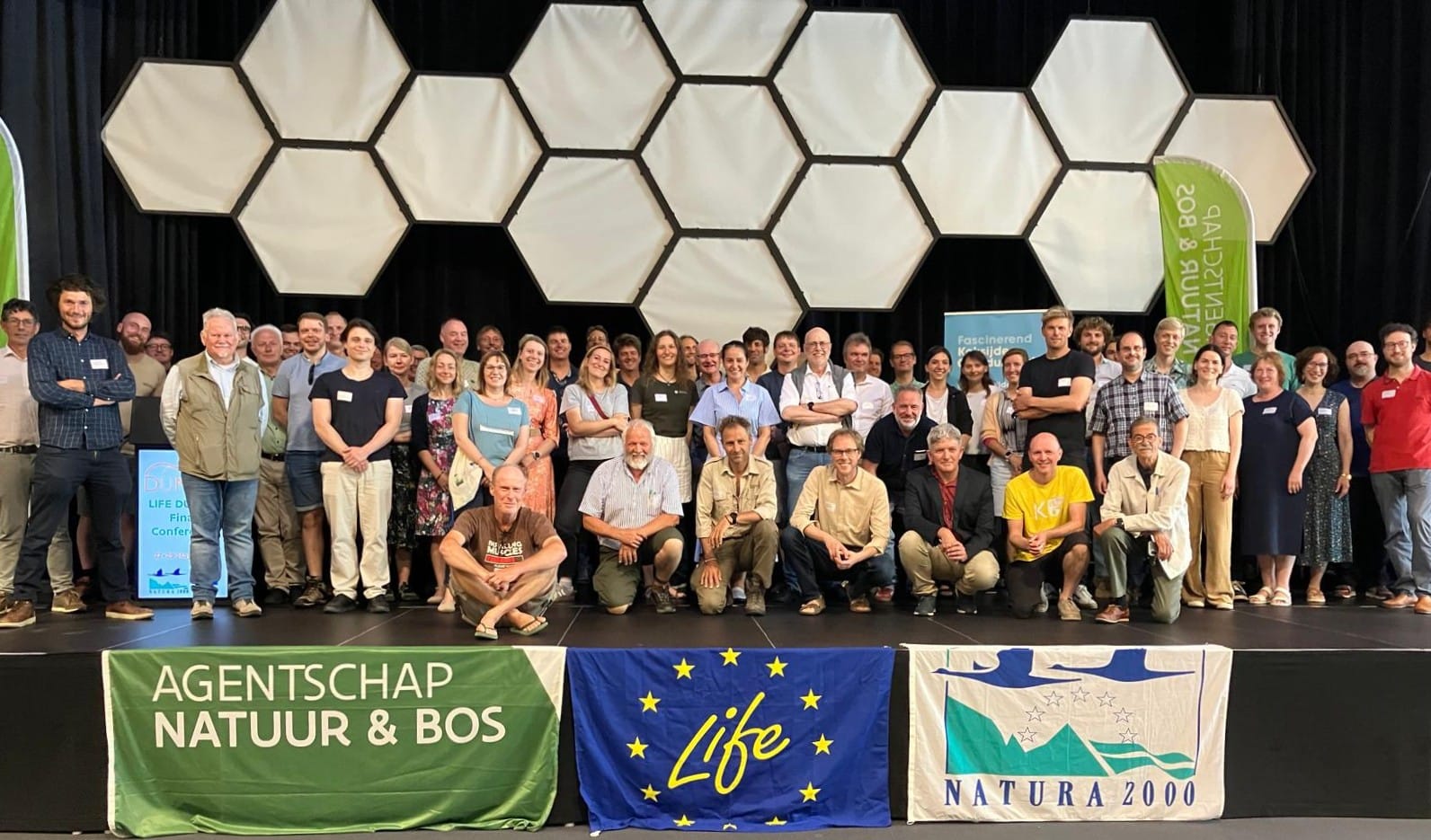

LIFE terrAmare continues to strengthen its European network of collaboration for the protection of coastal ecosystems. From 27 to 29 May 2026, the D.R.E.Am. Italia team attended the final conference of the LIFE DUNIAS project in Koksijde, Belgium. This project is a leading European initiative in the control of invasive alien species (IAS) and the restoration of dune habitats in Flanders.
The event brought together numerous European experts, protected area managers and representatives of LIFE projects from various countries, including Belgium, Spain, Denmark, the Netherlands, the United Kingdom, Poland and Lithuania, creating a vital forum for discussing best practices in coastal biodiversity management.
During the session on 29th May, D.R.E.Am. Italia presented the objectives and structure of LIFE terrAmare, focusing on the integrated management model and the active involvement of local communities through the ‘Eco-Beach Communities’ in the protection and restoration of these ecosystems.
The conference was also attended by the team from the CSIC (Botanical Institute of Barcelona), a partner in the LIFE terrAmare project responsible for WP4, which focuses specifically on the management of invasive plant species at the project sites in Italy and Greece. On this occasion, the experiences gained from the LIFE medCLIFFS project were presented. It is precisely from this model that LIFE terrAmare will draw important methodological references for the application of eradication protocols (particularly for critical species such as Carpobrotus spp., Acacia saligna and Ailanthus altissima), predictive risk mapping systems and awareness-raising campaigns aimed at both the general public and the horticultural sector – all essential tools for improving the prevention and management of biological invasions.
The day of 28 May was devoted to an extensive field visit to the sites of Plaatsduinen, Witte Burg and Ter Yde. Accompanied by Belgian experts, we were able to observe first-hand the effectiveness of the mechanical and biological containment methods applied by LIFE DUNIAS, analysing the recovery times of native dune vegetation and the positive impact on the health of the habitats and those who live them.
The findings from Belgium confirm the importance of timely, integrated and coordinated action to tackle the fragmentation of coastal habitats. The knowledge gained and the contacts made during the conference will help to strengthen the operational protocols of LIFE terrAmare, optimising fieldwork and promoting sustainable, scientifically sound conservation of the Mediterranean coastline.