
The Erasmus+ project EU4SUPA participated in Europe’s leading forum on mountain territories to promote sustainable pastoralism, strengthen European cooperation, and contribute to discussions on the future of extensive livestock farming.
Sallanches, France | 30 June – 2 July 2026
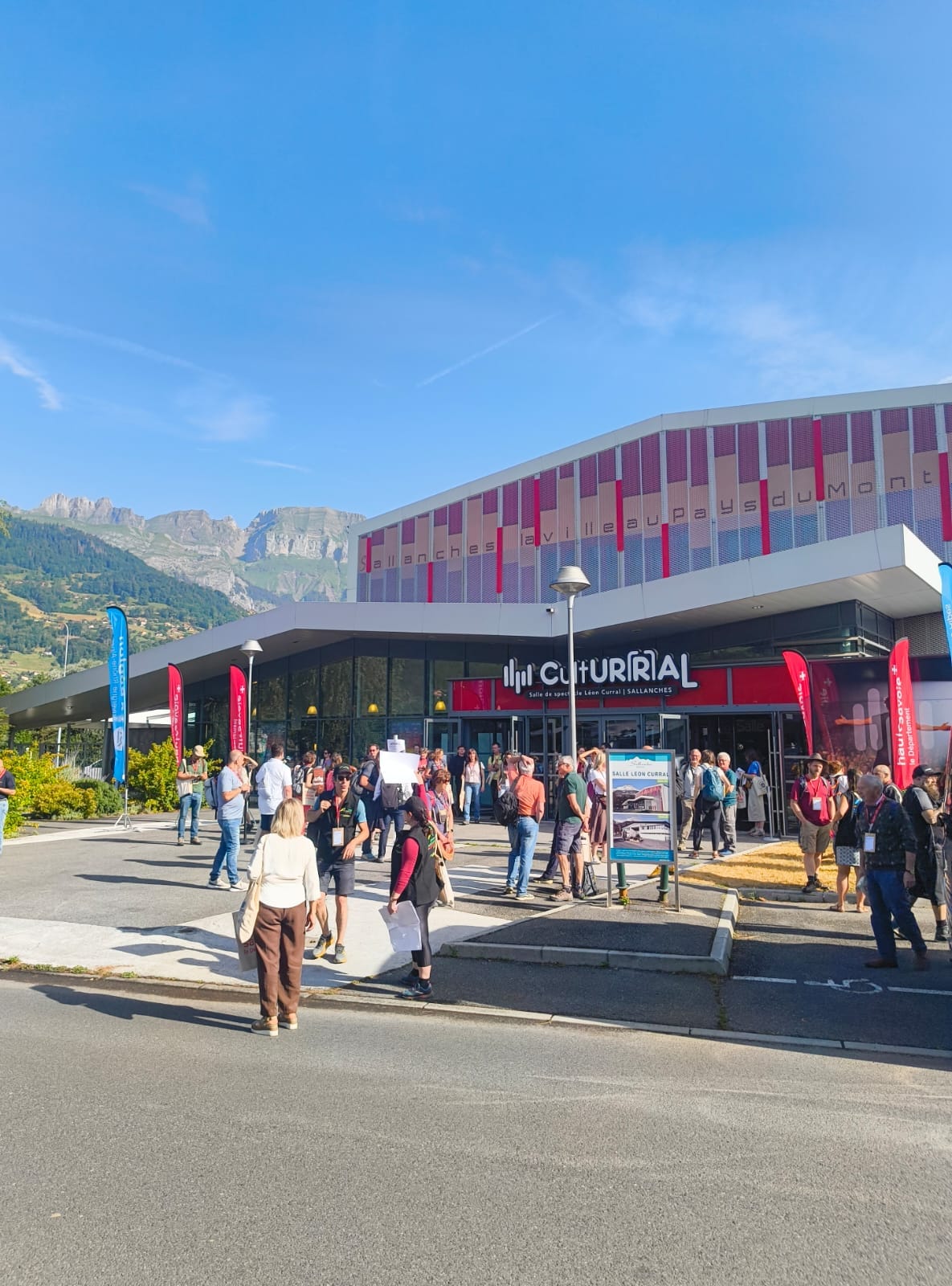
The EU4SUPA Erasmus+ project participated in the XIV European Mountain Convention, held in Sallanches (Haute-Savoie), France, from 30 June to 2 July 2026. Organized under the theme “From Pastures to Policies: Ensuring the Future of Extensive Livestock Farming in Mountain Territories”, and within the framework of the 2026 International Year of Rangelands and Pastoralists, the Convention brought together policymakers, researchers, pastoral organizations, farmers and practitioners from across Europe to explore the challenges and opportunities shaping the future of mountain pastoralism.
Represented by project partner D.R.E.AM. Italia, the EU4SUPA consortium attended the Convention as part of its dissemination, communication and stakeholder engagement strategy. Participation provided an excellent opportunity to present the project’s objectives, strengthen cooperation with European stakeholders and contribute to policy discussions directly linked to the future of sustainable pastoralism.
Over three days, the consortium gained first-hand insights into emerging European policies, innovative practices and future trends affecting pastoralism. The event also enabled project partners to establish new contacts and strengthen collaboration with organizations across the Euromontana network and other European initiatives, creating opportunities for future cooperation beyond the lifetime of the project.
The 2026 edition focused entirely on extensive livestock farming, examining its economic sustainability, environmental contribution and strategic role within future European policies. This made the Convention particularly relevant for EU4SUPA, whose mission is to strengthen vocational education and training for sustainable pastoralism across Europe.
The Convention offered an extensive programme combining keynote speeches, thematic workshops and high-level policy discussions. The consortium followed discussions on the future of the Common Agricultural Policy (CAP) beyond 2027, gaining valuable insights into how European policies may support sustainable pastoralism, generational renewal and resilient mountain communities. Further debates explored labour shortages, skills development, market resilience, innovation and the attractiveness of pastoral careers, bringing together representatives from the European Commission’s DG AGRI, the Food and Agriculture Organization (FAO), Euromontana, national farmers’ organizations, regional authorities and pastoral communities.
Particularly relevant to EU4SUPA were the sessions dedicated to professional education and training for future mountain livestock professionals, where experts discussed the knowledge, practical skills, and competencies required by the next generation of shepherds and pastoral practitioners.
In particular, the workshop “Training Future Professionals for Mountain Livestock Systems”, co-organised by Euromontana and DREAm within the framework of the LIFE ShepForBio, Erasmus + ShepForEco, and EU4SUPA projects, focused on the role of shepherding schools as key drivers of territorial development. Participants highlighted that these schools can go beyond their traditional training function to become hubs for innovation, knowledge exchange, and community development. The discussion emphasised the need to strengthen the links between pastoralism, tourism, and ecology, promoting integrated and sustainable development models that enhance local products while creating new economic opportunities for mountain communities.
The workshop also underlined the importance of flexible training pathways that respond to the evolving needs of the sector by supporting the transmission of practical knowledge, fostering adaptation to climate change, and ensuring the recognition of acquired skills. Participants stressed the value of building a network of shepherding schools to facilitate the exchange of experiences, strengthen collaboration across territories, and promote continuous professional development.
Finally, the discussion reaffirmed the contribution of shepherding schools to generational renewal, professional integration, and the long-term economic, social, and cultural vitality of mountain communities.
The Convention concluded by outlining the shared priorities of Europe’s mountain community for strengthening extensive livestock farming in the years ahead. At the same time, the Convention acknowledged the significant challenges facing the sector, including an ageing workforce, limited generational renewal, climate change, market volatility, the coexistence with large carnivores and the difficulty of transferring practical knowledge to younger generations.
Participation in the XIV European Mountain Convention confirmed the importance of transnational cooperation in building a more sustainable and resilient future for pastoralism in Europe.